Quinn Simon · 4 October 2026
Harnessing Undersized Pathways to Cut Emissions in Last-Mile Urban Deliveries
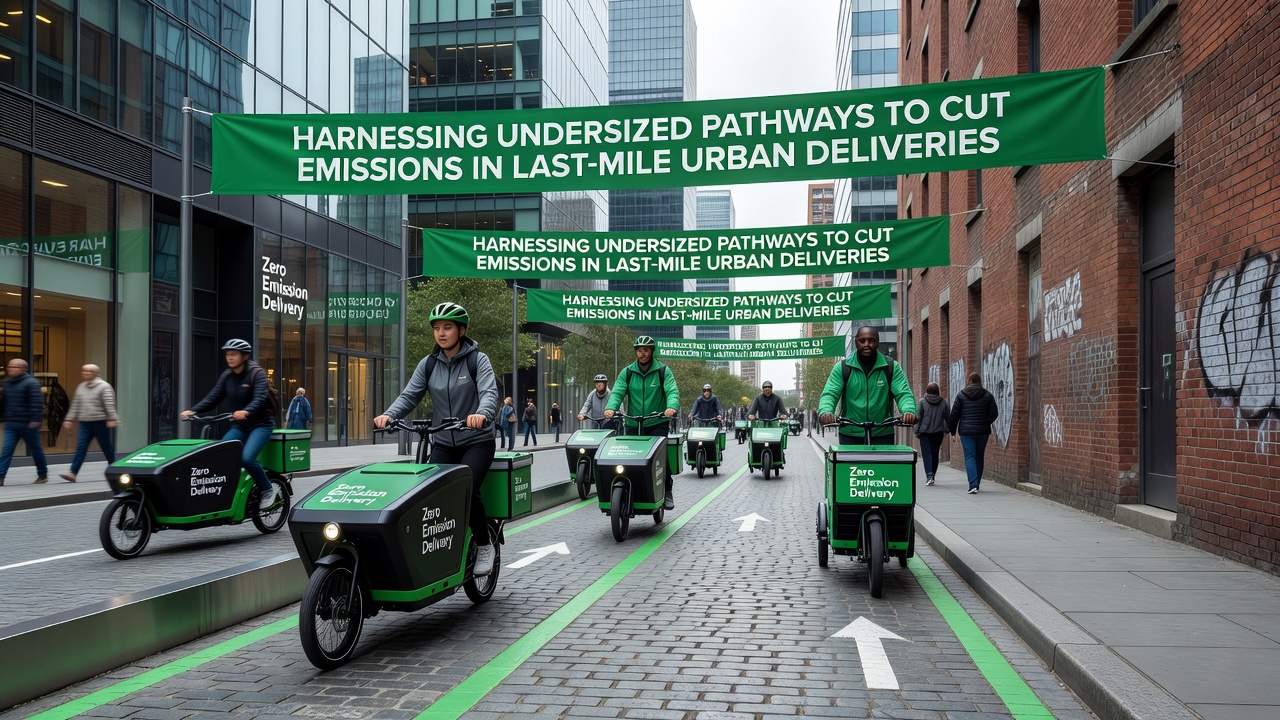
Urban logistics networks face mounting pressure from last-mile delivery demands that account for up to 50 percent of total freight transport emissions in major cities according to data compiled by the European Environment Agency, and operators increasingly turn to undersized pathways such as service alleys, protected bike lanes, and pedestrian-priority zones to deploy smaller vehicles that bypass congested arterial roads. These routes allow cargo bicycles, electric tricycles, and compact electric vans to complete deliveries while cutting fuel consumption and tailpipe pollutants because shorter distances and lower speeds reduce energy requirements per package.
Research from the US Department of Transportation indicates that conventional diesel vans traveling only 30 percent of their route on main roads still generate the bulk of their emissions during stop-start traffic in dense neighborhoods, whereas vehicles restricted to narrower corridors maintain steadier velocities and avoid idling at intersections. Cities that integrate these pathways into delivery planning report measurable drops in nitrogen oxide and particulate matter concentrations near loading zones, particularly when fleets switch to zero-emission modes.
Mapping and Design of Compact Corridors
City planners now employ geospatial modeling to identify underutilized lanes that connect distribution hubs directly to commercial districts without traversing wide boulevards, and software platforms combine satellite imagery with traffic sensors to rank corridors by width, gradient, and legal access permissions. Municipalities in North America and Europe have opened former service roads to cargo bikes during designated hours, creating continuous networks that link warehouses to retail clusters while maintaining separation from pedestrian flows through physical barriers and time-based restrictions.
Studies conducted by university transportation research centers show that well-marked micro-corridors reduce average delivery distance by 15 to 25 percent compared with traditional routing that relies on major thoroughfares, and the resulting time savings compound when multiple stops occur within a single block because drivers avoid circling back from distant parking locations. Maintenance standards for these pathways include reinforced surfaces capable of supporting repeated loads from electric cargo bikes carrying up to 200 kilograms, along with drainage improvements that prevent pooling during seasonal rains.
Vehicle Technologies Suited to Constrained Spaces
Manufacturers have developed purpose-built electric cargo bikes and quadricycles whose dimensions fit within the 1.5-meter width typical of many service alleys, and battery packs sized for 50 to 80 kilometer daily ranges eliminate range anxiety while regenerative braking recovers energy on downhill segments common in hilly districts. Sensors embedded in the frames provide real-time data on load distribution and path clearance, allowing dispatch systems to reroute vehicles dynamically when temporary obstructions appear.
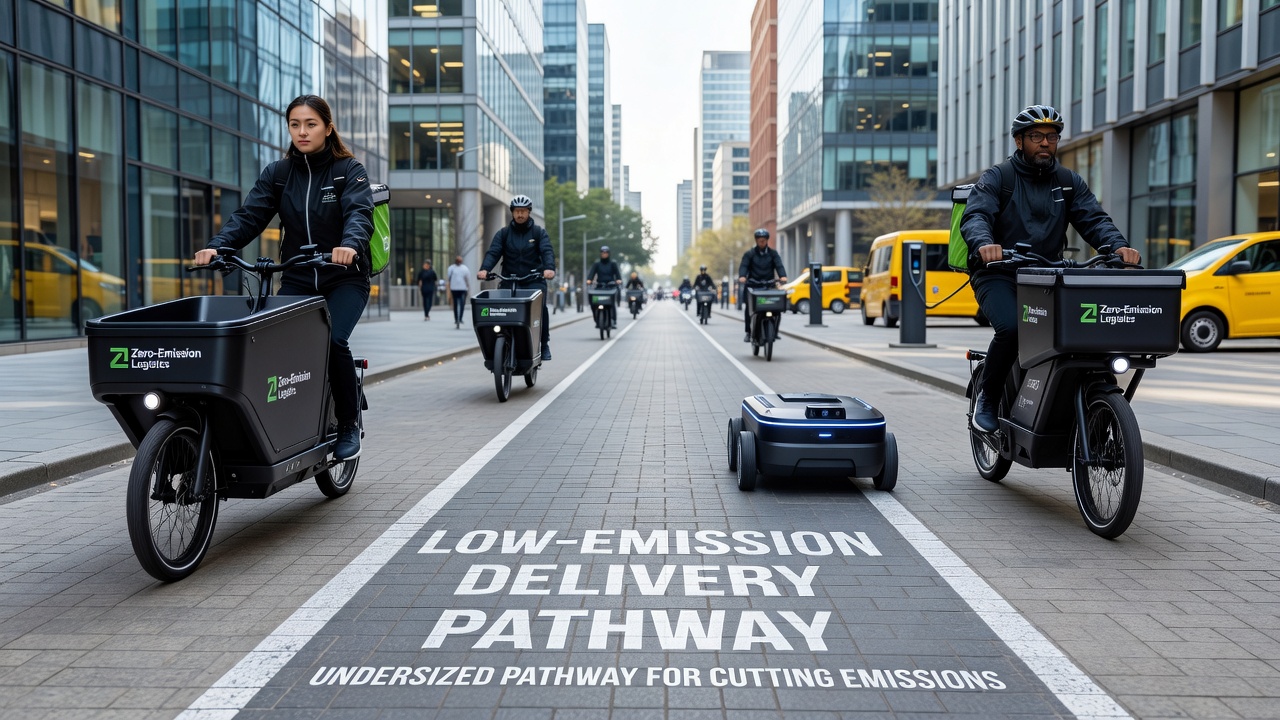
Fleet operators that adopted these vehicles in pilot programs across Canadian and Australian cities observed fuel cost reductions exceeding 60 percent on routes previously served by vans, and maintenance intervals lengthened because electric drivetrains experience less wear than internal combustion engines operating in frequent stop-start conditions. Integration with traffic management platforms enables priority signaling at intersections where pathways cross larger roads, further smoothing travel times and lowering the energy needed per delivery.
Policy Frameworks and October 2026 Developments
Regulatory bodies continue to refine access rules that balance commercial needs against residential quiet hours and pedestrian safety, and several jurisdictions have introduced incentive structures such as reduced congestion charges for operators demonstrating verified use of designated micro-corridors. In October 2026 the European Commission is scheduled to release updated guidance on urban freight decarbonization that explicitly references performance metrics for pathway utilization, prompting cities to publish open data sets showing corridor utilization rates and emission outcomes.
Industry associations representing logistics providers have collaborated with academic institutions to establish standardized reporting protocols that track vehicle kilometers traveled on undersized routes versus conventional streets, and these metrics feed into broader air quality models used by environmental agencies. Observers note that consistent data collection helps identify bottlenecks where additional pathway widening or signage upgrades would yield the greatest emission reductions.
Implementation Challenges and Mitigation Strategies
Coordination between multiple stakeholders remains essential because property owners who control private service alleys must grant formal access agreements, and insurance frameworks need updating to cover operations on routes previously classified as non-vehicular. Pilot projects have addressed security concerns through GPS-tracked vehicles and illuminated pathway segments that reduce theft risks during evening deliveries.
Training programs for riders emphasize defensive cycling techniques and load-securing methods that prevent cargo shifts on narrow turns, while public awareness campaigns inform residents about new delivery patterns to minimize conflicts. Data collected from early adopters demonstrates that combining pathway access with route optimization software produces compounding benefits because algorithms learn which sequences of micro-corridors minimize both distance and elevation gain.
Conclusion
Evidence accumulated from operational deployments shows that systematic use of undersized pathways paired with appropriately scaled electric vehicles delivers quantifiable reductions in last-mile emissions without compromising delivery reliability. Continued refinement of mapping tools, vehicle specifications, and regulatory incentives will determine how widely these practices scale in the coming years, and the scheduled policy updates in October 2026 are expected to accelerate adoption by providing clearer performance benchmarks for cities and operators alike.